New to Radon?
Radon 101.
What is Radon?
Start Here!

Understanding Radon Doesn't Have to Be Complicated
Most people first hear about radon during a real estate transaction, but it's something every homeowner should understand. Radon is a naturally occurring radioactive gas that comes from the soil and can enter any home, regardless of age or construction style.
Because it's invisible, odorless, and tasteless, it often goes undetected for years. However, high levels are a significant health risk. The good news? Radon is entirely measurable and manageable. This page is your starting point for clear, science-based guidance on protecting your family's health.
More Radon Information
◇
Why Is Radon a Concern?
It is the second leading cause of lung cancer. Invisible, odorless, and tasteless.
Exposure to radon is the second leading cause of lung cancer in the United States, and the leading cause among non-smokers. When you breathe in radon, radioactive particles can get trapped in your lungs. Over time, these particles release small bursts of energy that can damage lung tissue and lead to lung cancer. The risk is significantly higher for current or former smokers.
◈
How Does Radon Get Into My Home?
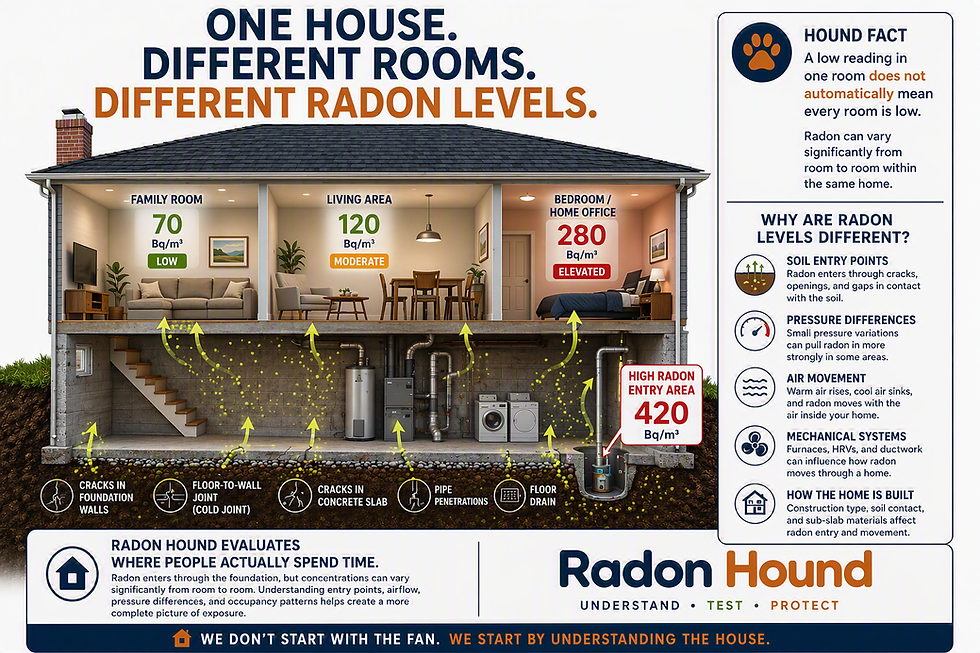
Enters through foundation cracks, sumps, and gaps in contact with the soil.
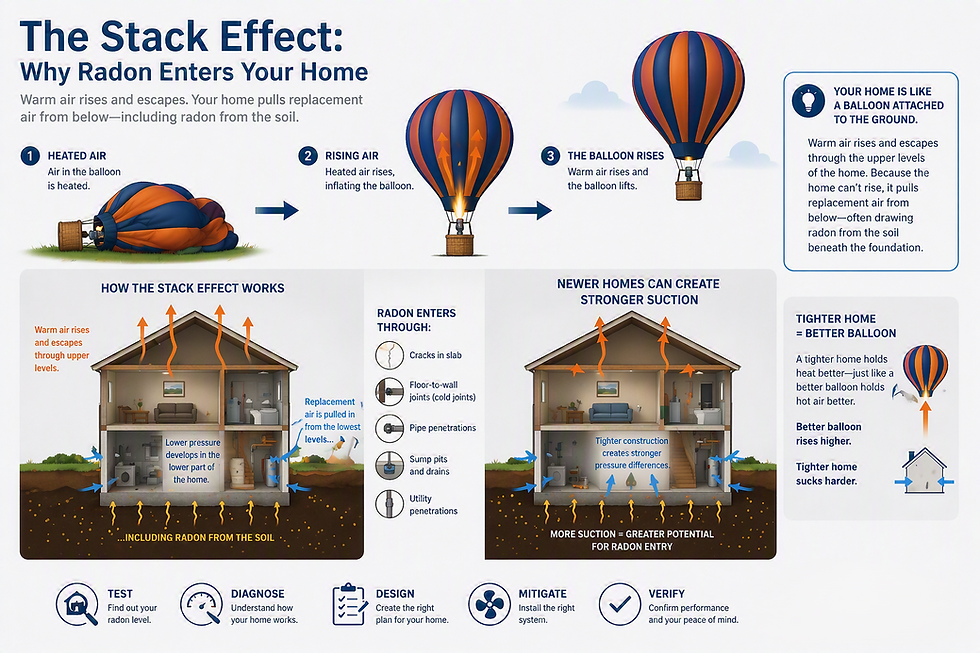
Radon gas can enter a home through cracks in solid floors, construction joints, cracks in walls, gaps in suspended floors, gaps around service pipes, and even through the water supply. It is drawn into the house because the air pressure inside a home is usually lower than the pressure in the soil around the house’s foundation. This difference in pressure acts like a vacuum, pulling radon in through every possible opening.
◇
Radon Testing Explained
Science-based methods using professional devices over short or long periods.
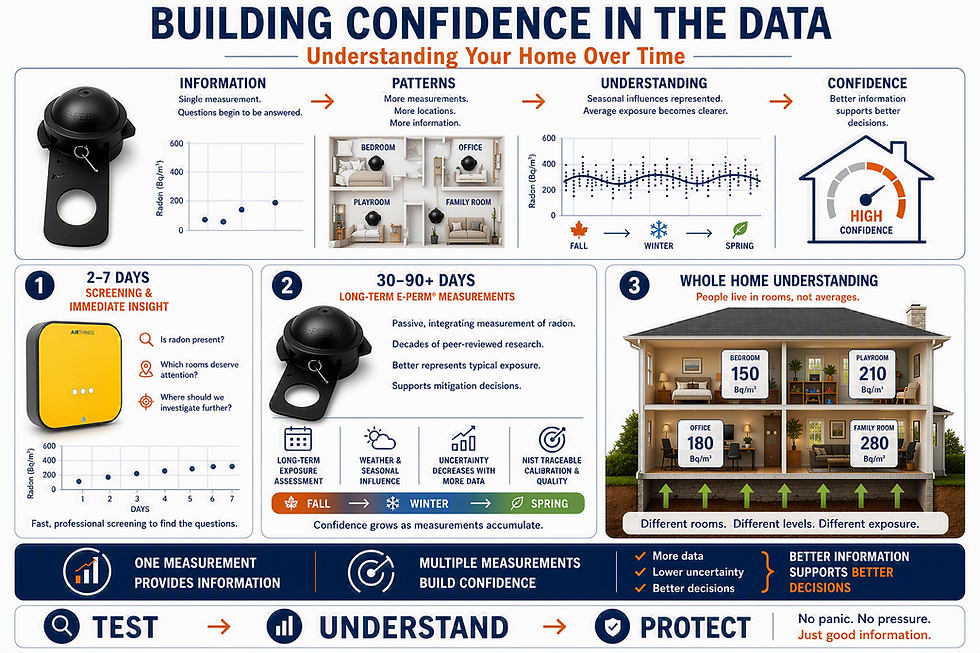
Testing is the only way to know your home's radon level. Short-term tests (2-90 days) are useful for quick results, often used during real estate transactions. Long-term tests (over 90 days) provide a better estimate of the average annual radon level, as radon levels fluctuate daily and seasonally. Professional testing with certified continuous monitors provides the most accurate and reliable data.
◈
Understanding Radon Results
Interpreting pCi/L or Bq/m³ numbers to decide if mitigation is necessary.
Radon measurements vary by border: Canada uses becquerels per cubic metre (Bq/m³) while the United States uses picocuries per litre (pCi/L). To convert your readings, use these simple formulas: pCi/L × 37 ≈ Bq/m³ and Bq/m³ ÷ 37 ≈ pCi/L. The World Health Organization (UN) recommends keeping levels below 100 Bq/m³ to best protect your health. Because there is no recordable limit that is entirely risk-free, understanding these values is key to your family's safety. If you need help interpreting your data, please call Radon Hound for a professional consult.
◇
Radon Mitigation Basics
Technical systems designed to safely vent radon gas from under your home.
Mitigation is the process used to reduce radon gas concentrations in the breathing zones of occupied buildings. The most common method is active soil depressurization (ASD), where a vent pipe system and fan pull radon from beneath the house and vent it to the outside. This prevents radon from entering the home in the first place.
Why Testing Matters
Radon is a measurable and manageable risk. We believe in an education-first philosophy where science-based detection leads to healthier living. Knowing your numbers is the only way to transform an invisible threat into a solved problem.

Plan of Action
✓
Understand the risk: Learn how radon enters and affects your specific home environment.
✓
Measure accurately: Use certified professional devices for reliable, lab-verified data.
✓
Interpret the results: Get a professional breakdown of what your numbers actually mean.
✓
Make informed decisions: Take the next step based on science, not scare tactics.
✓
Mitigate when necessary: Implement custom-fit solutions designed for your lifestyle.